The critique salon
Make Feedback Useful
A thoughtful response helps a photographer see a decision more clearly. It does not need to sound authoritative, and it does not need to turn the picture into your own.
Find a space that supports your kind of practice
Online photography communities vary in purpose. Some emphasize image sharing, some discuss equipment, and others organize structured critique or challenges. Read recent discussions before posting. Look for specific observations, clear moderation and respectful disagreement rather than assuming a large audience produces better learning.
Flickr groups, photography communities on Reddit and the community areas of photo-sharing services can be starting points for exploration. Their rules, privacy settings and features can change. Review the current terms and group guidance yourself; these examples are not endorsements or promises of a particular experience.
Poppixapicniteam.online is an independent educational website. We do not operate an upload platform, membership scheme or moderated critique group, and we are not affiliated with the services mentioned. Use our prompts wherever you feel comfortable participating.

Prepare a post that invites an answer
Choose one photograph or a short sequence that follows the group's format. Add a concise intention and a focused question. “I wanted the plant to feel small within the room; does the dark foreground help establish that scale?” tells readers what kind of decision you are examining.
Technical details are useful when they explain a problem. Include shutter speed when discussing motion blur, for example, but do not bury a composition question under an equipment inventory. Disclose major manipulation when relevant, and state whether you welcome edit demonstrations or only written comments.
Before uploading, consider people, permissions and location information. Avoid revealing a private address or another person's sensitive circumstances. Read the platform's licensing terms and understand whether a public post can be redistributed. Owning a photograph does not remove every privacy or consent concern surrounding its subjects.
Build your response in four movements
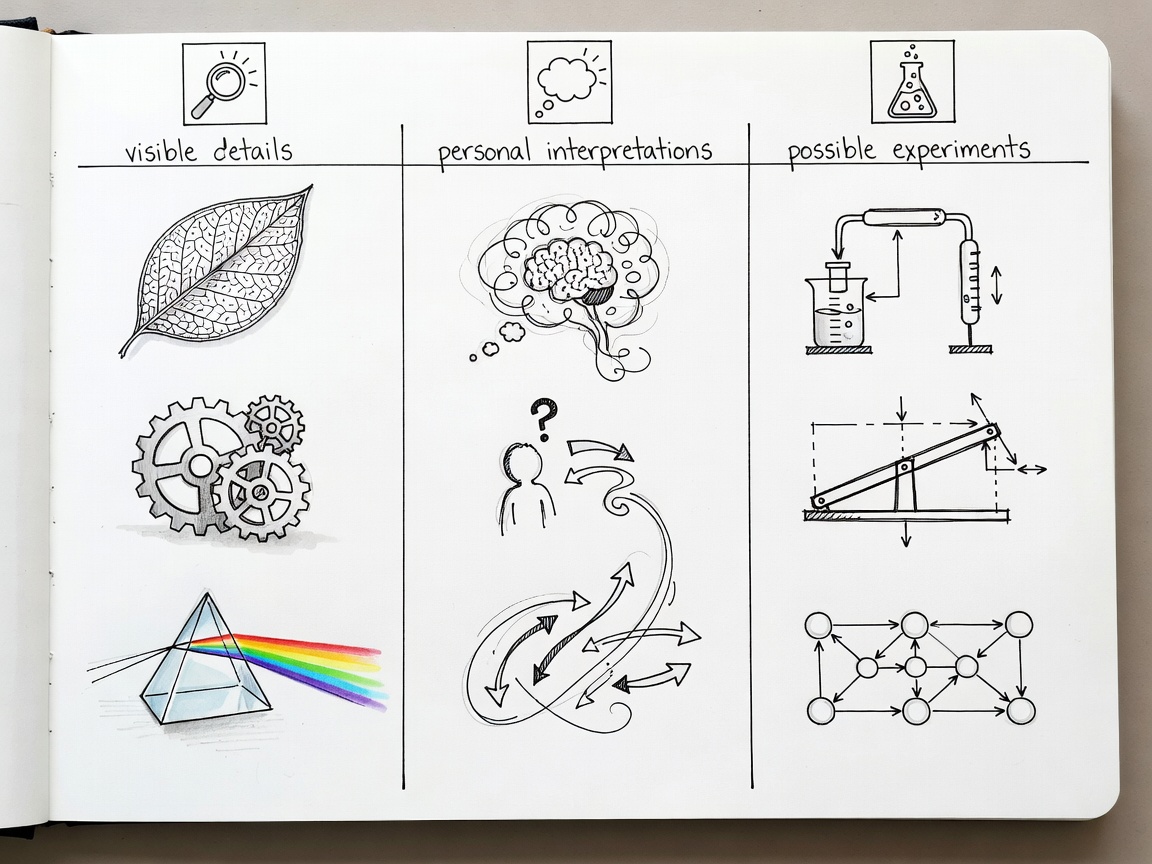
- Observe. Name something visible: a bright shape, a repeated line, a gesture or an overlap. Keep it separate from assumptions about what happened.
- Interpret. Explain your viewing experience in the first person. “My eye returns to the window” is more precise than “The composition is wrong.”
- Connect. Relate that experience to the photographer's stated intention. A distracting edge matters differently in a calm study than in a deliberately restless image.
- Offer or ask. Suggest one test, or ask a question that opens a choice. Avoid an overwhelming list of fixes.
Be specific about what works
Constructive feedback is not merely criticism wrapped in praise. Explain successful choices with the same care you give possible changes. “The repeated chair backs lead me toward the person at the end” gives the maker a decision they can recognize and develop.
Avoid diagnosing emotions, identity or personal history from a photograph. You can say a pose appears tense to you without asserting that the person was anxious. Likewise, distinguish a technical observation from a preference. A dark image may be intentional; a visible sharpening halo is a different kind of claim.
Ask before downloading, editing or reposting someone else's work. An illustrative crop can help, but only when the photographer and the community's rules permit it. Written feedback is often enough.
Receive feedback without surrendering the photograph
Read a response once for its meaning before preparing a defense. Ask for clarification if a comment is vague: “Which part feels busy to you?” You do not need to agree with every suggestion to learn from where another viewer's attention went.
When advice conflicts, compare it with your intention and test alternatives separately. Save the original, make a revision and inspect both after a pause. You may keep the first version while still learning that a certain bright area changes how people enter the image.
Popularity is not the same as a useful diagnosis. A quiet, carefully described response may help more than many likes. If a conversation becomes hostile, step away and use the platform's moderation or reporting tools. Participation should not require tolerating harassment.
Close the learning loop
Thank people for the time they spent, especially when their observations are specific. If you post a revision, explain the change and what you discovered rather than presenting it as proof that someone won the discussion.
Carry one insight into your next photograph. Perhaps you will check the frame edges earlier or write an intention before editing. The aim is not to collect approval. It is to make your next creative decision with a little more awareness.